This product is solely intended for research purposes as a chemical compound. Its designation permits its use exclusively for in vitro testing and laboratory experimentation. All information regarding this product provided on our website is purely educational. By law, any form of bodily introduction of this product into humans or animals is strictly prohibited. It should only be handled by professionals who are licensed and qualified. This product is neither a drug, food, nor cosmetic, and must not be misrepresented, misused, or mislabeled as such.
In stock
Swipe right to view full table →
Cost per milligram |
$3.20 – $4.40 |
Purity |
99.90% |
Certified Endotoxin-safe |
Yes |
Independently Tested |
Yes |
Peptide Partners Manufacturer Id: VI32
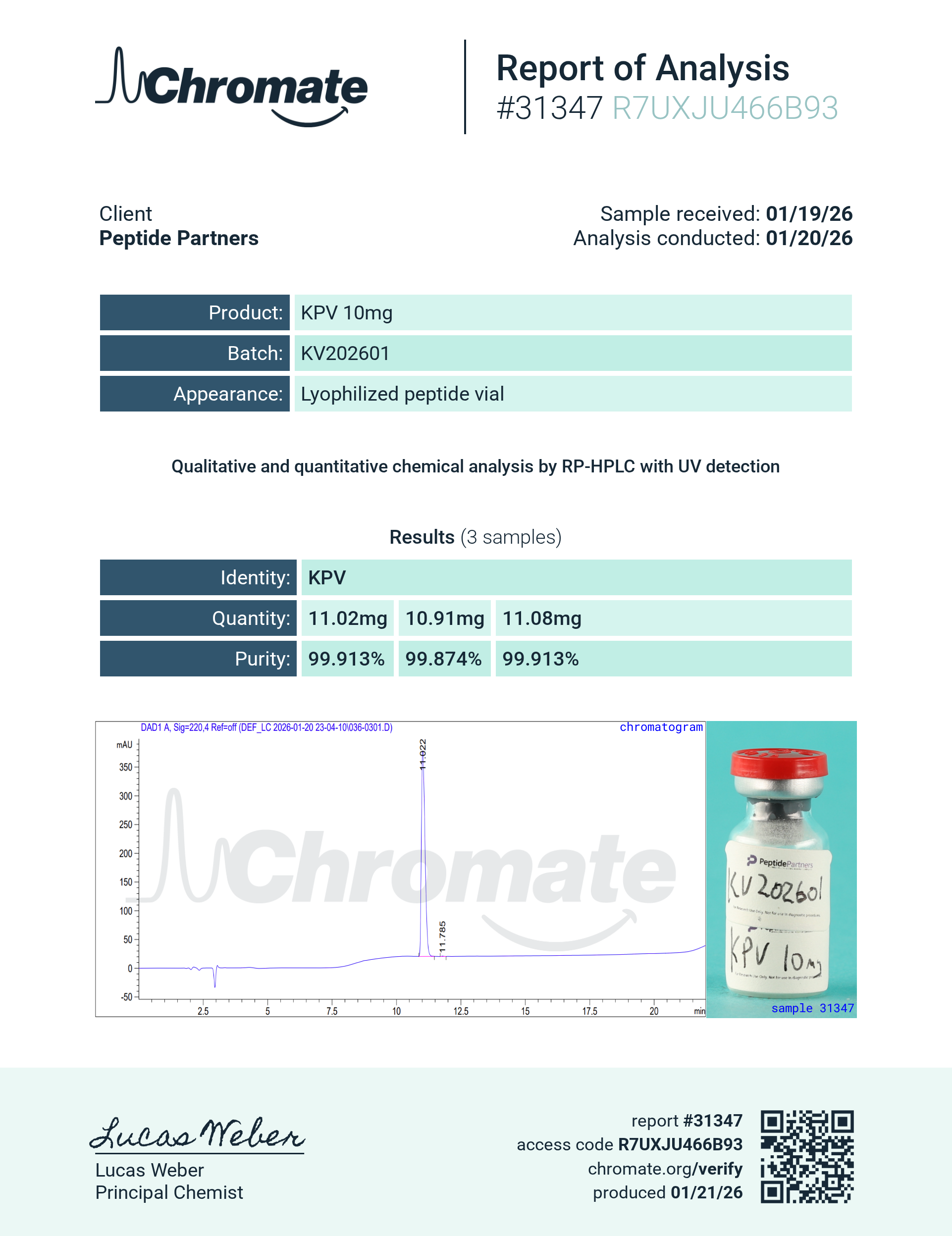
Batch Id: KV202601
Title: PepT1-Mediated Tripeptide KPV Uptake Reduces Intestinal Inflammation
Authors: Guillaume Dalmasso, Laetitia Charrier-Hisamuddin, Hang Thi Thu Nguyen, Yutao Yan, Shanthi Sitaraman, Didier Merlin
URL: https://pmc.ncbi.nlm.nih.gov/articles/PMC2431115/
Published: Gastroenterology, 2007 Oct 17;134(1):166–178
Human intestinal epithelial cells (Caco2-BBE and HT29-Cl.19A) and human T cells (Jurkat) were stimulated with pro-inflammatory cytokines in the presence or absence of KPV to investigate its anti-inflammatory mechanisms. Nanomolar concentrations of KPV inhibited the activation of nuclear factor-kappa B (NF-κB) and mitogen-activated protein (MAP) kinase inflammatory signaling pathways and reduced pro-inflammatory cytokine secretion. Uptake experiments were performed using radiolabeled tritiated KPV ([3H]KPV) to determine kinetic characteristics of KPV cellular uptake. The study found that KPV acts via human peptide transporter 1 (hPepT1) expressed in both immune and intestinal epithelial cells. KPV anti-inflammatory effects were assessed using NF-κB luciferase gene reporter assays, western blot analysis for signaling proteins, real-time reverse transcription polymerase chain reaction (RT-PCR) for gene expression, and enzyme-linked immunosorbent assay (ELISA) for cytokine quantification. The study demonstrated that KPV is transported into cells by PepT1 and exerts anti-inflammatory effects through inhibition of pro-inflammatory signaling pathways at concentrations as low as nanomolar range.
This research showed that KPV, a tiny three-amino-acid peptide, can reduce inflammation in intestinal and immune cells grown in the laboratory. The peptide enters cells through a specific transporter protein called PepT1, which normally helps absorb nutrients from food. Once inside the cells, even very small amounts of KPV block the activation of key inflammatory signaling pathways, particularly NF-κB, which is like a master switch for inflammation. This prevents the cells from producing inflammatory chemicals called cytokines. The researchers tracked KPV movement into cells using a radioactive version of the peptide and measured its anti-inflammatory effects using multiple laboratory techniques, demonstrating that KPV could potentially be developed as a treatment for inflammatory bowel diseases.
Title: Lysine-Proline-Valine peptide mitigates fine dust-induced keratinocyte apoptosis and inflammation by regulating oxidative stress and modulating the MAPK/NF-κB pathway
Authors: Junghee Sung, Seo-Young Ju, SeungHyun Park, Won-Kyo Jung, Jae-Young Je, Sei-Jung Lee
URL: https://www.sciencedirect.com/science/article/abs/pii/S004081662500117X
Published: Tissue and Cell, Volume 95, August 2025, 102837
The study investigated the protective effects of KPV against oxidative damage and inflammation induced by fine particulate matter (PM10) in human HaCaT keratinocytes using in vitro cell culture methods. HaCaT cells were exposed to PM10 at different concentrations (0–200 μg/mL) for 24 hours, with significant cytotoxic effects observed at concentrations between 100 and 200 μg/mL. Treatment with 50 μg/mL of KPV restored cell viability and reduced interleukin-1 beta (IL-1β) secretion that had been disrupted by PM10 exposure. KPV inhibited reactive oxygen species (ROS) production, which is responsible for activating extracellular signal-regulated kinase (ERK) and p38 mitogen-activated protein kinase (MAPK). KPV decreased the expression of apoptosis-related proteins including Bax, Bcl-2, and cleaved caspase-3, as well as IL-1β, through suppression of the redox-sensitive transcription factor nuclear factor-kappa B (NF-κB) in PM10-treated HaCaT cells. KPV effectively blocked ROS-mediated caspase-1 activation, thereby reducing IL-1β secretion. In a three-dimensional (3D) skin model, KPV treatment effectively attenuated the inflammatory cell death induced by PM10, demonstrating that KPV protects keratinocytes by mitigating PM10-induced pyroptosis.
This study examined how KPV protects skin cells from damage caused by air pollution particles. When human skin cells were exposed to fine dust particles in laboratory dishes, the pollution triggered harmful reactions including production of damaging molecules called reactive oxygen species, activation of stress pathways, and ultimately cell death through inflammation. Adding KPV to the cell cultures prevented these harmful effects by blocking the production of reactive oxygen species and stopping the inflammatory signaling cascades that would normally kill the cells. The researchers tested this not only in simple cell cultures but also in a more realistic three-dimensional artificial skin model, showing that KPV could protect skin from environmental pollution damage. This suggests KPV might be useful in skin care products designed to protect against air pollution.
Title: Inhibition of cellular and systemic inflammation cues in human bronchial epithelial cells by melanocortin-related peptides: mechanism of KPV action and a role for MC3R agonists
Authors: Stephen C Land
URL: https://pmc.ncbi.nlm.nih.gov/articles/PMC3403564/
Published: International Journal of Physiology, Pathophysiology and Pharmacology, 2012 Jun 23;4(2):59–73
Tumor necrosis factor-alpha (TNFα) and rhinosyncitial virus (RSV)-evoked nuclear factor-κB (NFκB) signaling was measured in immortalised human bronchial epithelial cells (16HBE14o-) in response to KPV using in vitro cell culture techniques. KPV evoked a dose-dependent inhibition of NFκB transcriptional activity, matrix metalloproteinase-9 (MMP-9) enzymatic activity, and secretion of the chemokines interleukin-8 (IL-8) and eotaxin. The anti-inflammatory effect of KPV was associated with its nuclear import into cells, stabilisation of the inhibitory protein IκBα, and suppressed nuclear translocation of yellow fluorescent protein (YFP)-tagged p65RelA, a key subunit of NFκB. Competition assays revealed a direct interaction between KPV and the importin-α3 (Imp-α3) binding site on p65RelA, which may involve blockade of the importin-α armadillo repeat domains 7 and 8. The study demonstrates that KPV translocates to the nucleus in human bronchial epithelial cells and competitively blocks the interaction between Imp-α3 and the p65RelA subunit of NFκB. Cellular and systemic inflammatory signaling was measured using NFκB luciferase reporter gene assays and chemokine secretion quantified by enzyme-linked immunosorbent assay (ELISA). The results show that KPV suppresses NFκB signalling in airway epithelium by directly inhibiting p65RelA nuclear import through competitive binding.
This research uncovered exactly how KPV stops inflammation in lung cells at the molecular level. When lung cells are exposed to viruses or inflammatory signals, a protein complex called NFκB normally moves into the cell nucleus to turn on genes that cause inflammation. The researchers discovered that KPV actually travels into the cell and physically blocks this process by interfering with the transport system that carries NFκB into the nucleus. It’s like KPV acts as a decoy or competitor that prevents the inflammatory proteins from reaching their destination. Using cells that had fluorescent tags attached to key proteins, the scientists could watch this blocking action happen in real time under the microscope. This mechanism is different from many anti-inflammatory drugs and explains why KPV can reduce inflammation caused by various triggers including viruses and inflammatory chemicals in lung tissue.
Storage:
All of our manufacturing partners produce peptides using the Lyophilization (Freeze Drying) process, ensuring products maintain stability for shipping and storage for 12+ months.
In lyophilized form, they are shelf-stable for many weeks. However, for long-term storage, it is recommended to store them in the freezer.
We often hear concerns about the standard “discard after 28 days of first use” disclaimer. Don’t worry, this has nothing to do with studies regarding the efficacy of specific peptides. 28 days is the FDA requirement for producers of multi-use vials to prove their bacteriostatic maintains efficacy. This minimum requirement becomes the de facto standard.
In our experience, if you use proper sterile procedures and refrigerated storage, you can continue sampling from the same reconstituted vial for 3+ months.
Peptide Partners is committed to providing high-purity peptides at wholesale prices by frequently auditing its manufacturing partners using third-party laboratories. Independent analysis is vital to ensuring the quality and authenticity of your research peptides. Never trust a supplier that doesn’t submit to third-party testing. Never trust a certification that cannot be independently verified. All of the certificates that we provide can be validated on the third-party laboratory’s website.
Each product description contains a Manufacturer ID corresponding to the producer of that product. The table below contains the most recent third-party analyses for all manufacturers and peptides listed on Peptide Partners.
| Peptide | Batch Id | Manufacturer | Date | Purity | Laboratory | |
|---|---|---|---|---|---|---|
| GHK-Cu | CU202604 | WF03 | 2026-04-03 | 99.93% | Kovera | View File |
| SS-31 | SS202601 | WF03 | 2026-04-03 | 99.82% | TrustPointe | View File |
| Semax | SX202603 | WF03 | 2026-03-31 | 99.91% | Kovera | View File |
| Retatrutide | RT202603 | WF03 | 2026-03-30 | 99.40% | TrustPointe | View File |
| GLOW Blend | GW202603 | WF03 | 2026-03-25 | 99.88% | Kovera | View File |
| Tirzepatide | TZ202603 | VI32 | 2026-03-27 | 99.89% | TrustPointe | View File |
| BPC-157/TB-500 | BB202604 | WF03 | 2026-03-27 | 99.63% | TrustPointe | View File |
| Tesamorelin | TES202603 | WF03 | 2026-03-25 | 99.52% | TrustPointe | View File |
| BPC-157 | BC202604 | VI32 | 2026-03-18 | 99.60% | TrustPointe | View File |
| Ipamorelin/CJC-1295 (No DAC) | CJIP202602 | WF03 | 2026-02-27 | 99.92% | TrustPointe | View File |
| Thymosin Alpha-1 | TA202602 | WF03 | 2026-02-25 | 99.95% | Kovera | View File |
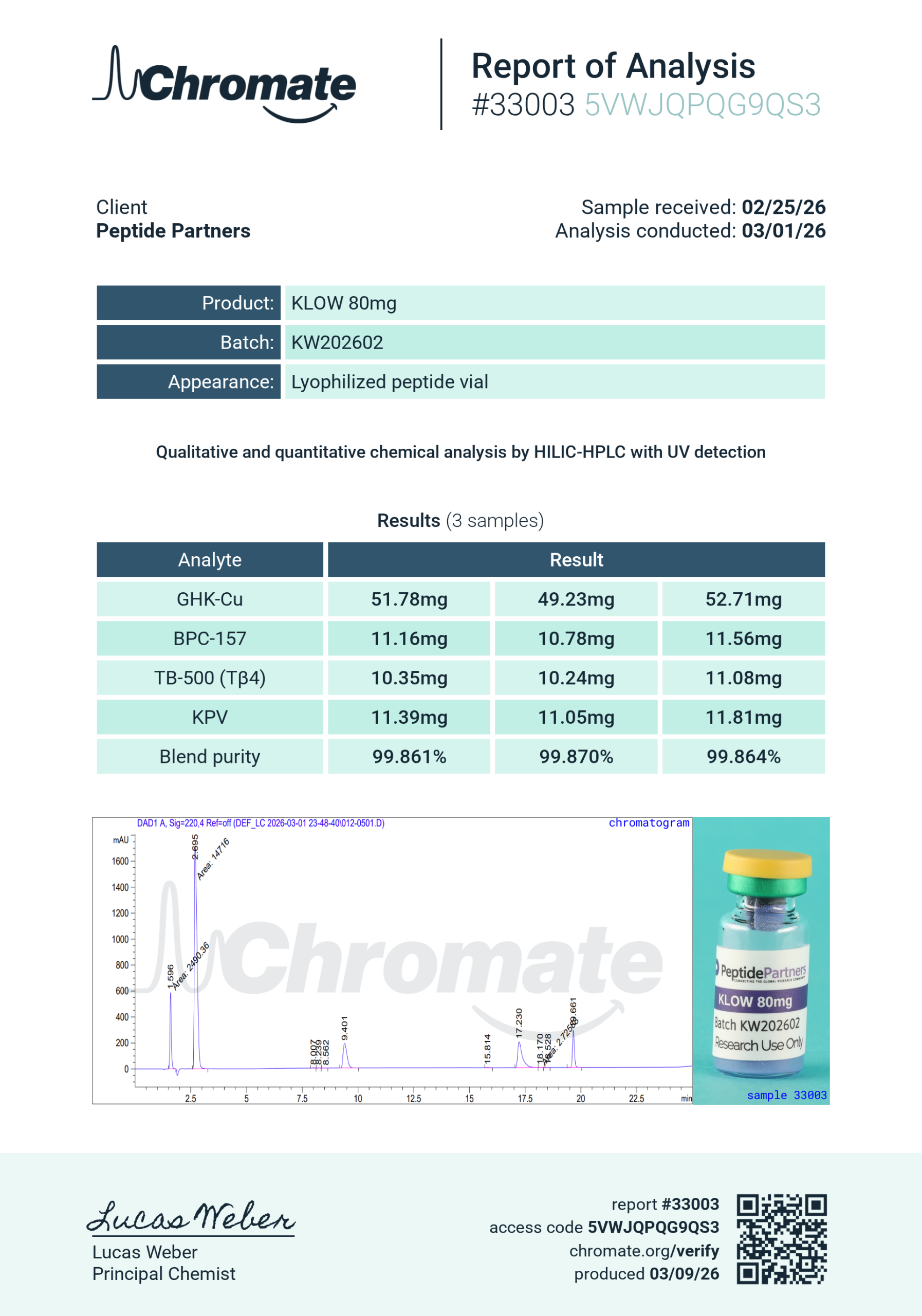
| KLOW | KW202602 | WF03 | 2026-03-01 | 99.86% | Chromate | View File |
| NAD+ | NDB202601 | VI32 | 2026-02-07 | 99.92% | Kovera | View File |
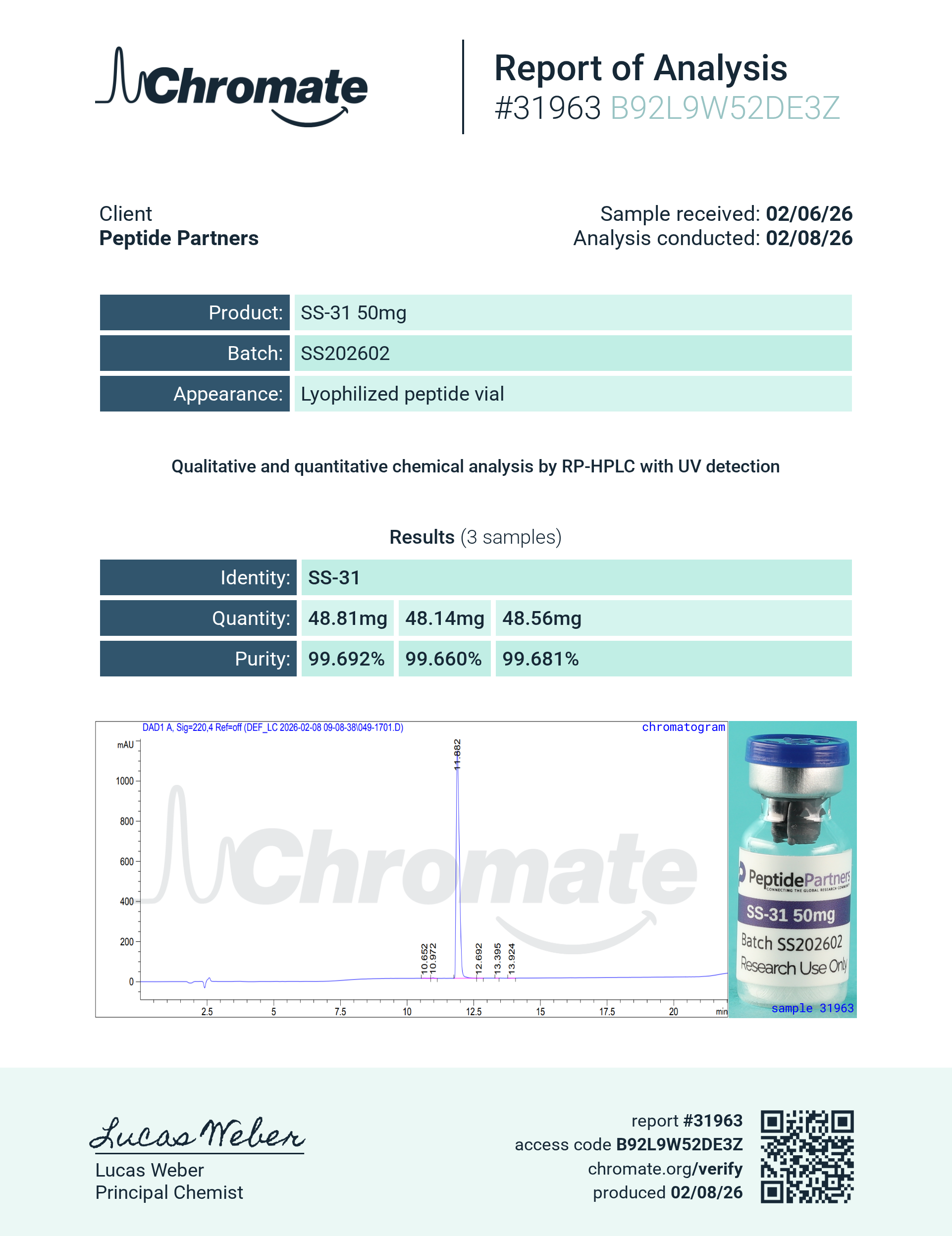
| SS-31 | SS202602 | WF03 | 2026-02-08 | 99.68% | Chromate | View File |
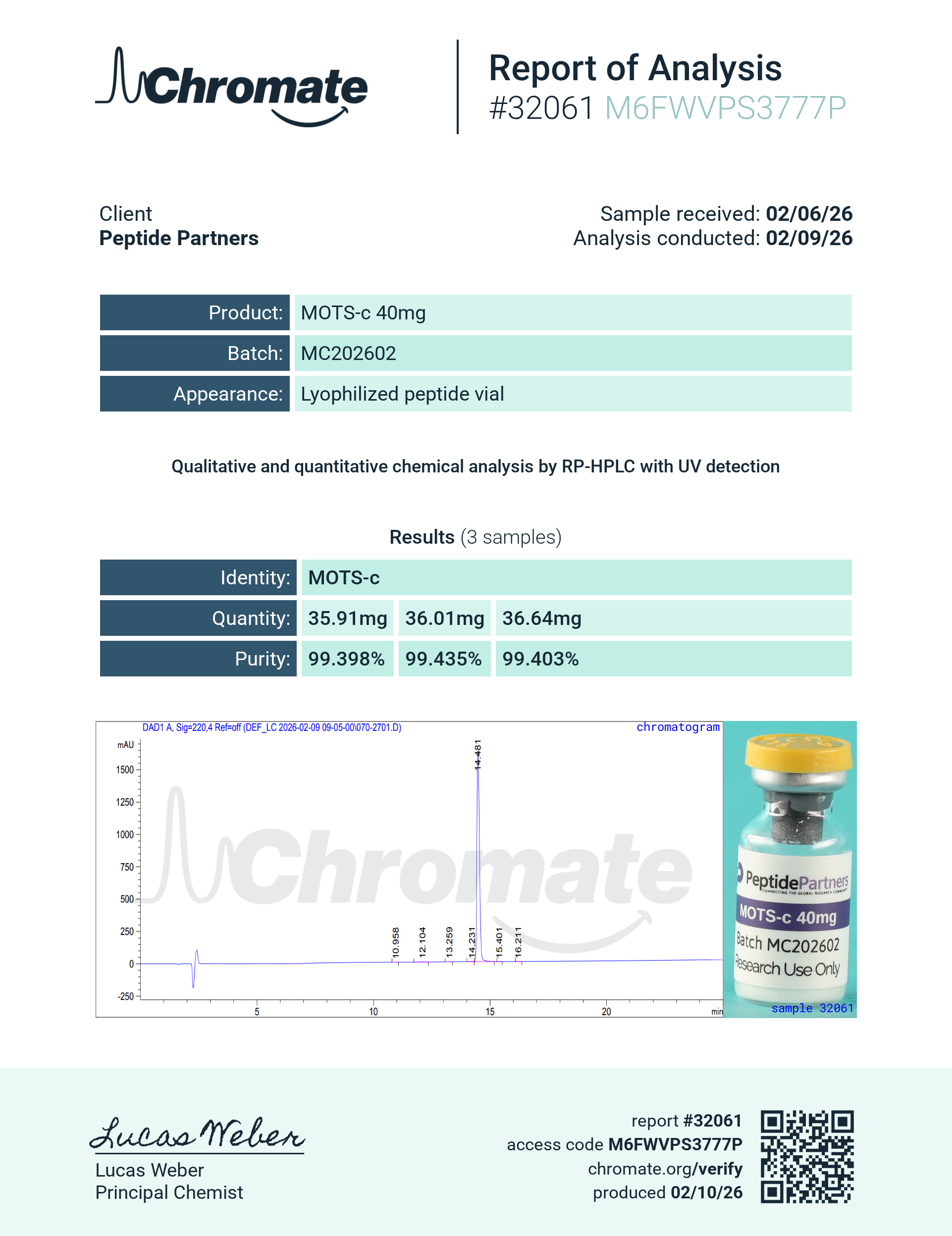
| MOTS-c | MC202602 | WF03 | 2026-02-09 | 99.41% | Chromate | View File |
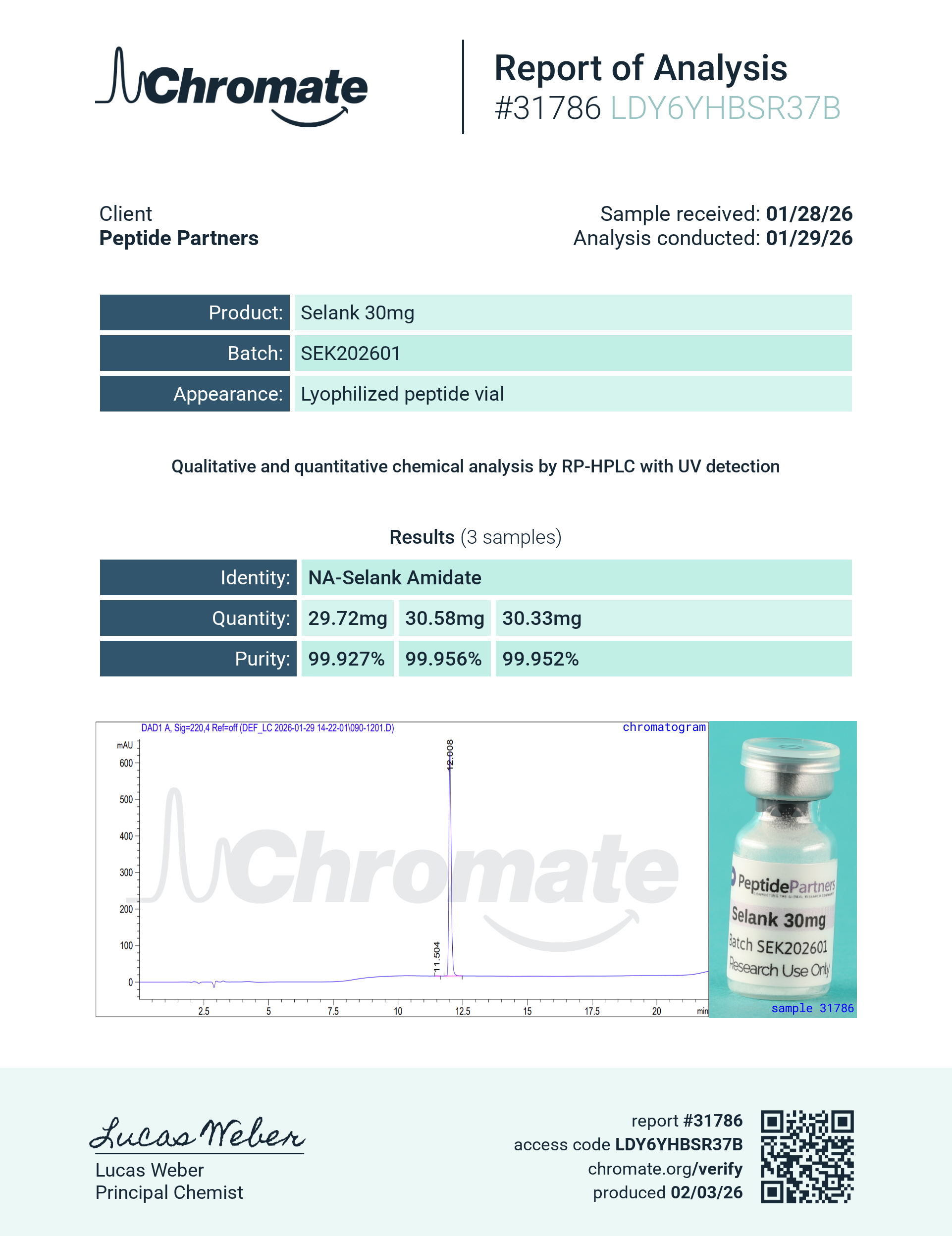
| Selank | SEK202601 | VI32 | 2026-01-29 | 99.94% | Chromate | View File |
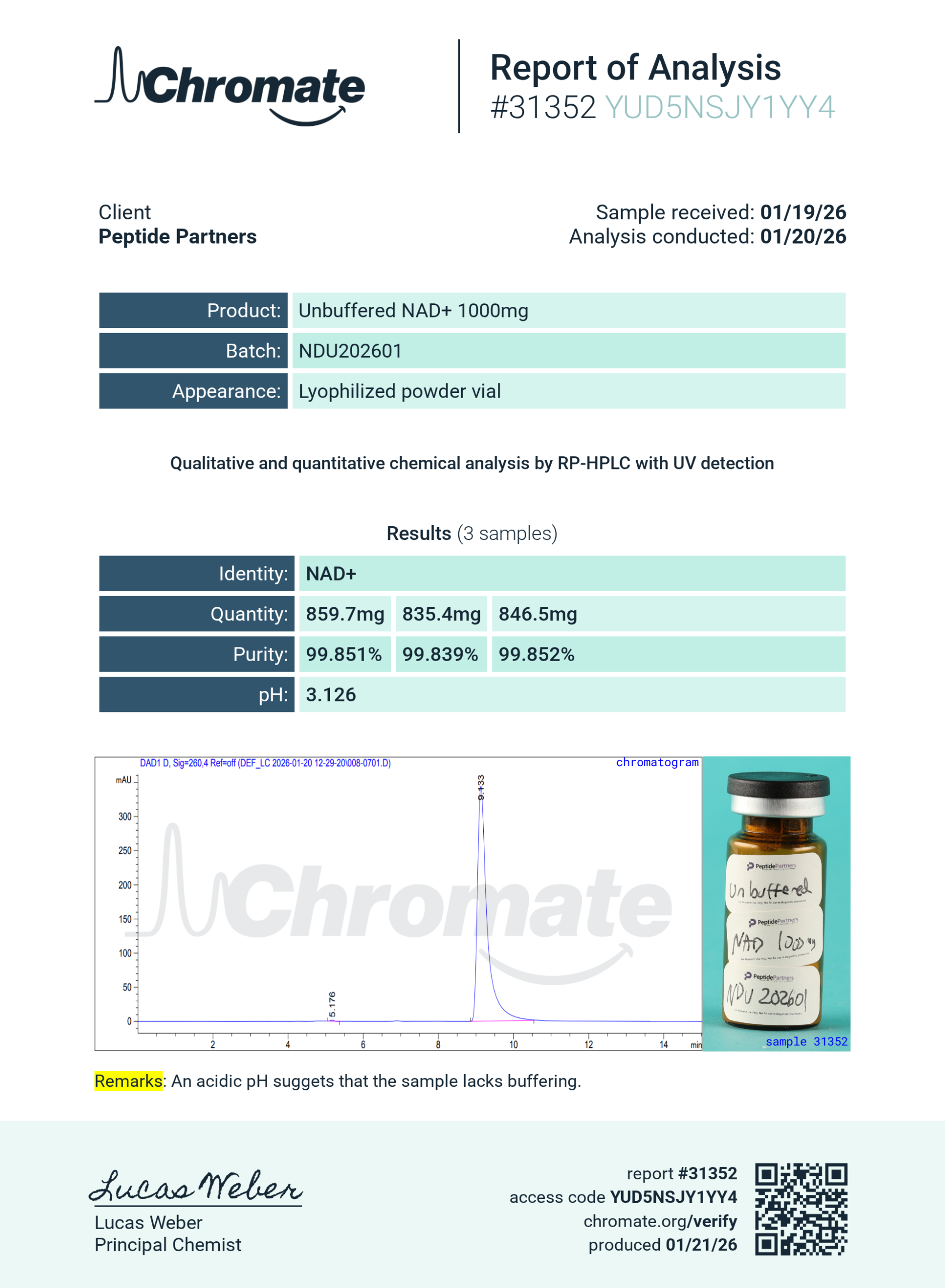
| Unbuffered NAD+ | NDU202601 | MZ21 | 2026-01-20 | 99.85% | Chromate | View File |
| KPV | KV202601 | VI32 | 2026-01-20 | 99.90% | Chromate | View File |
| Ipamorelin | IP202601 | WF03 | 2026-01-14 | 99.92% | TrustPointe | View File |
| TB500 (TB4) | TB202601 | WF03 | 2026-01-14 | 99.86% | TrustPointe | View File |
| Retatrutide | RT202602 | WF03 | 2026-01-13 | 99.63% | TrustPointe | View File |
| PT-141 | PT202512 | VI32 | 2026-01-12 | 99.89% | BioRegen | View File |
| Semaglutide | SM202601 | MZ21 | 2026-01-10 | 99.70% | TrustPointe | View File |
| Cagrilintide | CAG202601 | MZ21 | 2026-01-10 | 99.33% | TrustPointe | View File |
| Tesamorelin | TES202601 | WF03 | 2025-12-29 | 99.71% | TrustPointe | View File |
| BPC-157 | BP202512 | WF03 | 2025-12-29 | 99.46% | TrustPointe | View File |
| BPC-157/TB-500 | BB202512 | WF03 | 2025-12-29 | 99.64% | TrustPointe | View File |
| GHK-Cu | GK202512 | SH07 | 2025-12-19 | 99.79% | BioRegen | View File |
| MOTS-c | MC202512 | WF03 | 2025-12-22 | 99.89% | BioRegen | View File |
| Retatrutide | RP260130 | VI32 | 2025-12-22 | 99.72% | TrustPointe | View File |
| SS-31 | SS202512 | WF03 | 2025-12-19 | 99.70% | TrustPointe | View File |
| Retatrutide | RP202601 | DF05 | 2025-12-22 | 99.63% | TrustPointe | View File |
| Ipamorelin/CJC-1295 (No DAC) | CJIP202512 | WF03 | 2025-12-09 | 99.80% | TrustPointe | View File |
| Retatrutide | RP202511 | DF05 | 2025-12-19 | 99.73% | TrustPointe | View File |
| Retatrutide | RP20251020 | DF05 | 2025-11-10 | 99.33% | TrustPointe | View File |
| Retatrutide | RP20251001 | DF05 | 2025-10-13 | 99.86% | TrustPointe | View File |
| Tirzepatide | TZ20250915 | DF05 | 2025-10-03 | 99.74% | TrustPointe | View File |
| Retatrutide | RP20250929 | VI32 | 2025-10-03 | 99.47% | TrustPointe | View File |
| Humanin | HP20250805 | WF03 | 2025-09-19 | 99.92% | BioRegen | View File |
| MOTS-c | YC20250807 | WF03 | 2025-09-19 | 99.87% | BioRegen | View File |
| DSIP | DS20250820 | SH07 | 2025-09-19 | 99.88% | BioRegen | View File |
| SS-31 | SY20250806 | WF03 | 2025-09-19 | 99.70% | BioRegen | View File |
| CJC/Ipamorelin | CI20250805 | WF03 | 2025-09-11 | 99.84% | TrustPointe | View File |
| BPC-157 | BP20250808 | WF03 | 2025-09-05 | 99.99% | TrustPointe | View File |
| Sermorelin | SM20250723 | WF03 | 2025-08-27 | 99.84% | BioRegen | View File |
| Tesamorelin | TS20250722 | WF03 | 2025-08-22 | 99.10% | TrustPointe | View File |
| CJC-1295 ND | CJ20250724 | WF03 | 2025-08-20 | 99.43% | TrustPointe | View File |
| Semaglutide | SM20250801 | EJ12 | 2025-08-20 | 99.34% | TrustPointe | View File |
| Ipamorelin | IP20250721 | WF03 | 2025-08-15 | 99.64% | TrustPointe | View File |
| GHK-Cu | CU20250717 | SH07 | 2025-08-09 | 99.73% | BioRegen | View File |
| Tirzepatide | TZ20250730 | EJ12 | 2025-08-08 | 99.41% | TrustPointe | View File |
| NAD+ | ND20250503 | SH07 | 2025-07-31 | 99.76% | BioRegen | View File |
| VIP | VP20250511 | SH07 | 2025-07-31 | 99.42% | BioRegen | View File |
| Retatrutide | CD20250708 | SH07 | 2025-07-25 | 99.42% | TrustPointe | View File |
| BPC/TB500 | BB20250630 | SH07 | 2025-07-17 | 99.52% | TrustPointe | View File |
| TB500 (TB4) | TB20250614 | SH07 | 2025-07-17 | 99.68% | TrustPointe | View File |
| Peptide | Batch Id | Manufacturer | Date | USP Conformation | Laboratory | |
|---|---|---|---|---|---|---|
| GHK-Cu | CU202604 | WF03 | 2026-04-03 | Conforms | Kovera | View File |
| SS-31 | SS202601 | WF03 | 2026-04-03 | Conforms | TrustPointe | View File |
| Semax | SX202603 | WF03 | 2026-03-31 | Conforms | Kovera | View File |
| Retatrutide | RT202603 | WF03 | 2026-03-30 | Conforms | TrustPointe | View File |
| GLOW Blend | GW202603 | WF03 | 2026-03-25 | Conforms | Kovera | View File |
| Tirzepatide | TZ202603 | VI32 | 2026-03-27 | Conforms | TrustPointe | View File |
| BPC-157/TB-500 | BB202604 | WF03 | 2026-03-26 | Conforms | TrustPointe | View File |
| Tesamorelin | TES202603 | WF03 | 2026-03-25 | Conforms | TrustPointe | View File |
| BPC-157 | BC202604 | WF03 | 2026-03-17 | Conforms | Kovera | View File |
| Thymosin Alpha-1 | TA202601 | WF03 | 2026-02-25 | Conforms | Kovera | View File |
| NAD+ | NDB202601 | VI32 | 2026-02-08 | Conforms | Kovera | View File |
| Unbuffered NAD+ | NDU202601 | MZ21 | 2026-01-28 | Conforms | TrustPointe | View File |
| KPV | KV202601 | VI32 | 2026-01-28 | Conforms | TrustPointe | View File |
| Ipamorelin | IP202601 | WF03 | 2026-01-13 | Conforms | TrustPointe | View File |
| TB500 | TB202601 | WF03 | 2026-01-13 | Conforms | TrustPointe | View File |
| Retatrutide | RT202602 | WF03 | 2026-01-13 | Conforms | TrustPointe | View File |
| PT-141 | PT202512 | VI32 | 2026-01-07 | Conforms | BioRegen | View File |
| Semaglutide | SM202601 | MZ21 | 2026-01-10 | Conforms | TrustPointe | View File |
| Cagrilintide | CAG202601 | MZ21 | 2026-01-10 | Conforms | TrustPointe | View File |
| Tesamorelin | TES202601 | WF03 | 2025-01-06 | Conforms | TrustPointe | View File |
| BPC-157 | BP202512 | WF03 | 2025-12-30 | Conforms | TrustPointe | View File |
| BPC-157/TB-500 | BB202512 | WF03 | 2025-12-30 | Conforms | TrustPointe | View File |
| Retatrutide | RP260130 | DF05 | 2025-12-22 | Conforms | TrustPointe | View File |
| SS-31 | SS202512 | WF03 | 2025-12-19 | Conforms | TrustPointe | View File |
| Retatrutide | RP202601 | DF05 | 2025-12-22 | Conforms | TrustPointe | View File |
| Ipamorelin/CJC-1295 (No DAC) | CJIP202512 | WF03 | 2025-12-08 | Conforms | TrustPointe | View File |
| Retatrutide | RP202511 | DF05 | 2025-11-10 | Conforms | TrustPointe | View File |
| Retatrutide | RP20251020 | DF05 | 2025-11-10 | Conforms | TrustPointe | View File |
| Retatrutide | RP20251001 | DF05 | 2025-10-13 | Conforms | TrustPointe | View File |
| Tirzepatide | TZ20250915 | DF05 | 2025-10-03 | Conforms | TrustPointe | View File |
| Retatrutide | RP20250929 | VI32 | 2025-10-03 | Conforms | TrustPointe | View File |
| Humanin | HP20250805 | WF03 | 2025-09-19 | Conforms | BioRegen | View File |
| MOTS-c | YC20250807 | WF03 | 2025-09-19 | Conforms | BioRegen | View File |
| DSIP | DS20250820 | SH07 | 2025-09-19 | Conforms | BioRegen | View File |
| SS-31 | SY20250806 | WF03 | 2025-09-19 | Conforms | BioRegen | View File |
| CJC/Ipamorelin | CI20250805 | WF03 | 2025-09-03 | Conforms | TrustPointe | View File |
| BPC-157 | BP20250808 | WF03 | 2025-09-03 | Conforms | TrustPointe | View File |
| Bacteriostatic Water | BAC20250807 | SH07 | 2025-08-27 | Conforms | BioRegen | View File |
| Tesamorelin | TS20250722 | WF03 | 2025-08-20 | Conforms | TrustPointe | View File |
| CJC-1295 ND | CJ20250724 | WF03 | 2025-08-20 | Conforms | TrustPointe | View File |
| Sermorelin | SM20250723 | WF03 | 2025-08-20 | Conforms | TrustPointe | View File |
| Semaglutide | SM20250801 | EJ12 | 2025-08-20 | Conforms | TrustPointe | View File |
| Ipamorelin | IP20250721 | WF03 | 2025-08-11 | Conforms | TrustPointe | View File |
| GHK-Cu | CU20250717 | SH07 | 2025-08-08 | Conforms | TrustPointe | View File |
| Tirzepatide | TZ20250730 | EJ12 | 2025-08-04 | Conforms | TrustPointe | View File |
| NAD+ | ND20250503 | SH07 | 2025-07-29 | Conforms | TrustPointe | View File |
| VIP | VP20250511 | SH07 | 2025-07-29 | Conforms | TrustPointe | View File |
| Retatrutide | CD20250708 | SH07 | 2025-07-24 | Conforms | TrustPointe | View File |
| BPC/TB500 | BB20250630 | SH07 | 2025-07-17 | Conforms | TrustPointe | View File |
| TB500 (TB4) | TB20250614 | SH07 | 2025-07-17 | Conforms | TrustPointe | View File |
| Peptide | Batch Id | Manufacturer | Date | USP Conformation | Laboratory | |
|---|---|---|---|---|---|---|
| Semax | SX202603 | WF03 | 2026-03-31 | Conforms | Kovera | View File |
| GLOW Blend | GW202603 | WF03 | 2026-03-26 | Conforms | Kovera | View File |
| Tirzepatide | TZ202603 | VI32 | 2026-03-26 | Conforms | Kovera | View File |
| BPC-157 | BC202604 | WF03 | 2026-03-17 | Conforms | Kovera | View File |
| Thymosin Alpha-1 | TA202602 | WF03 | 2026-02-25 | Conforms | Kovera | View File |
| NAD+ | NDB202601 | VI32 | 2026-02-08 | Conforms | Kovera | View File |
| Ipamorelin | IP202601 | WF03 | 2026-01-26 | Conforms | TrustPointe | View File |
| TB500 | TB202601 | WF03 | 2026-01-26 | Conforms | TrustPointe | View File |
| Retatrutide | RT202602 | WF03 | 2026-01-26 | Conforms | TrustPointe | View File |
| Semaglutide | SM202601 | MZ21 | 2026-01-19 | Conforms | TrustPointe | View File |
| Cagrilintide | CAG202601 | MZ21 | 2026-01-19 | Conforms | TrustPointe | View File |
| Tesamorelin | TES202601 | WF03 | 2026-01-19 | Conforms | TrustPointe | View File |
| BPC-157 | BP202512 | WF03 | 2026-01-08 | Conforms | TrustPointe | View File |
| BPC-157/TB-500 | BB202512 | WF03 | 2026-01-08 | Conforms | TrustPointe | View File |
| Tirzepatide | TZ20250915 | DF05 | 2025-12-03 | Conforms | TrustPointe | View File |
| TB500 (TB4) | TB20250614 | SH07 | 2025-11-24 | Conforms | TrustPointe | View File |
| BPC-157 | BP20250808 | WF03 | 2025-11-12 | Conforms | TrustPointe | View File |
| BPC/TB500 | BB20250630 | SH07 | 2025-11-12 | Conforms | TrustPointe | View File |
| CJC-1295 ND | CJ20250724 | WF03 | 2025-11-12 | Conforms | TrustPointe | View File |
| GHK-Cu | CU20250717 | SH07 | 2025-11-12 | Conforms | TrustPointe | View File |
| Ipamorelin | IP20250721 | WF03 | 2025-11-12 | Conforms | TrustPointe | View File |
| Retatrutide | RP20251020 | DF05 | 2025-11-12 | Conforms | TrustPointe | View File |
| Sermorelin | SM20250723 | WF03 | 2025-11-12 | Conforms | TrustPointe | View File |
| SS-31 | SY20250806 | WF03 | 2025-11-12 | Conforms | TrustPointe | View File |
| TB500 (TB4) | TB20250614 | SH07 | 2025-11-12 | Conforms | TrustPointe | View File |
| Tesamorelin | TS20250722 | WF03 | 2025-11-12 | Conforms | TrustPointe | View File |
| Tirzepatide | TZ20250730 | EJ12 | 2025-11-12 | Conforms | TrustPointe | View File |
When obtaining research peptides, it is essential to validate the authenticity of the Certificate of Analysis (COA). Certificate fraud runs rampant throughout the research peptide supply community. The two most common forms are doctored images and stolen certificates. You can check for these two by making sure the third-party laboratory’s website shows that the certificate belongs to the supplier and the values haven’t been doctored. TrustPointe Analytics provides a few simple rules for verification:
Not only must one remain vigilant about potentially fraudulent certificates, one must also be aware that there are third-party laboratories whose results cannot be considered reliable or scientifically valid. Unfortunately, there is significant evidence to suggest that one of the most popular third-party testing labs does not use scientifically sound methodologies and, in some cases, has fabricated results. There isn’t an easy remedy for this problem, but when labs are particularly bad, there tend to be a lot of discussion threads on various social platforms.
Our friends at TrustPointe have provided the following detailed explanation to help interpret the results of the endotoxin testing.
We use the Charles River Endosafe PTS system to test for bacterial endotoxins following USP <85> guidelines:
The following are suitability parameters that verify the system was working properly and the sample prep dilution is appropriate for accurate results. Peptides often interfere with endotoxin detection due to their tendency to bind or mask endotoxins, which can lead to inaccurate low results. To overcome this, samples are typically tested at a large dilution to reduce matrix interference and ensure reliable recovery and detection in compliance with USP <85>. If the dilution is not correct, the run will fail suitability and we’ll need to adjust the dilution to ensure accurate results. We provide the suitability data to customers for transparency and so they can be confident in the results.
USP <85> Sample CV %:
USP <85> Spike CV %:
USP <85> Spike Recovery
Thank you for choosing Peptide Partners.
NOTICE: All information provided above is strictly intended for educational and informational purposes. Our products are designed for research use solely and are not approved for human consumption. Please refrain from any form of ingestion.
By making a purchase from Peptide Partners, you acknowledge that you are acquiring Research Chemicals. Our products are exclusively intended for laboratory research purposes.
It is imperative that only qualified and licensed professionals handle this product. Under no circumstances should it be utilized as a drug, agricultural or pesticide product, food additive, or household chemical. Misrepresentation of this product for such purposes is strictly prohibited by law. All content on our website is provided for educational use exclusively. Any form of introduction into the human or animal body is illegal.