This product is solely intended for research purposes as a chemical compound. Its designation permits its use exclusively for in vitro testing and laboratory experimentation. All information regarding this product provided on our website is purely educational. By law, any form of bodily introduction of this product into humans or animals is strictly prohibited. It should only be handled by professionals who are licensed and qualified. This product is neither a drug, food, nor cosmetic, and must not be misrepresented, misused, or mislabeled as such.
In stock
Swipe right to view full table →
Cost per milligram |
$2.30 – $3.90 |
Purity |
99.95% |
Certified Endotoxin-safe |
Yes |
Independently Tested |
Yes |
Peptide Partners Manufacturer Id: VI32
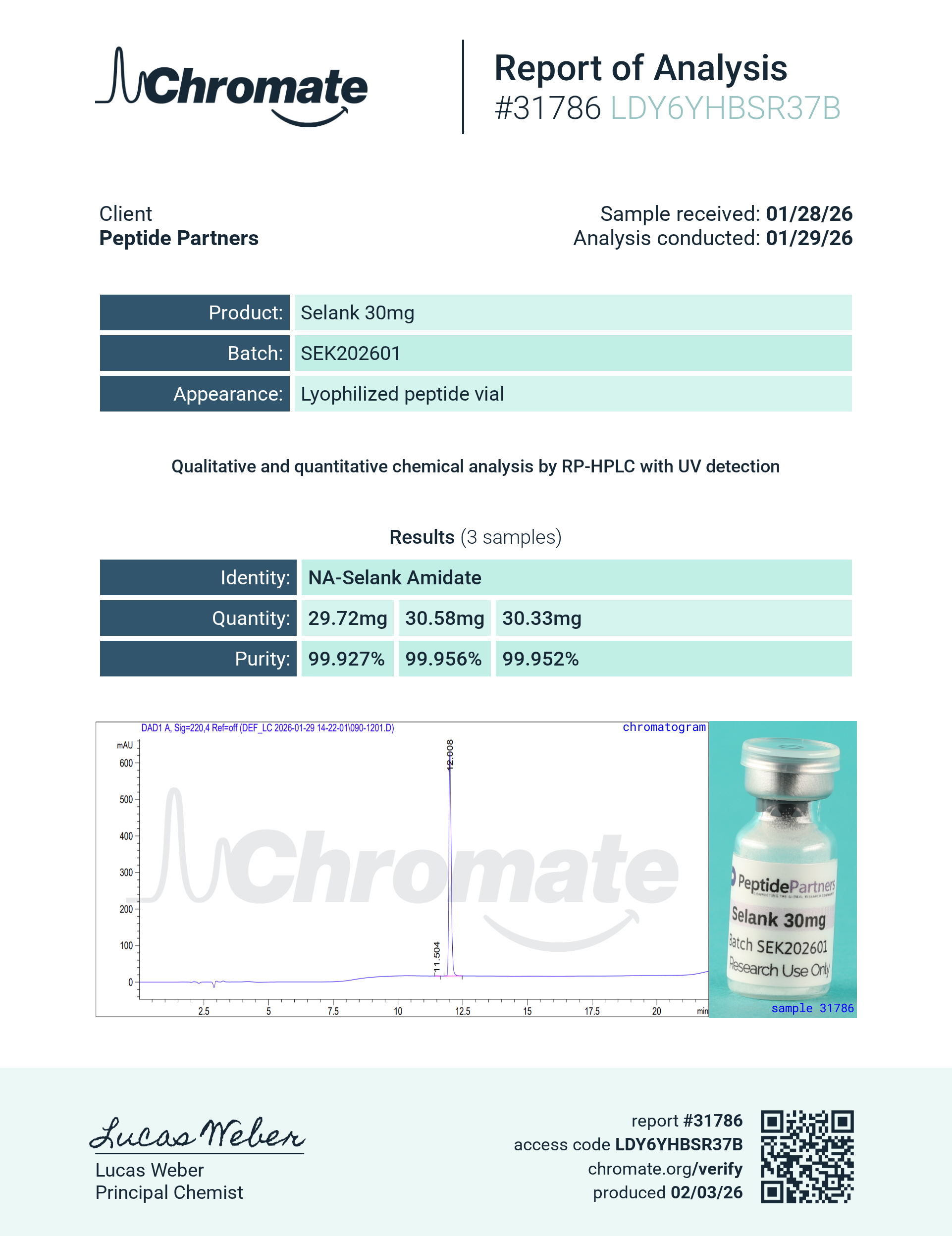
Batch Id: SEK202601
Authors: Anastasiya Volkova, Maria Shadrina, Timur Kolomin, Lyudmila Andreeva, Svetlana Limborska, Nikolay Myasoedov, Petr Slominsky
Published: Frontiers in Pharmacology, 2016 Feb 18;7:31
URL: https://pmc.ncbi.nlm.nih.gov/articles/PMC4757669/
The study analyzed the expression of 84 genes involved in neurotransmission (including major subunits of the GABA receptor, transporters, ion channels, dopamine, and serotonin receptors) in the frontal cortex of rats 1 and 3 hours after administration of Selank or GABA (300 μg/kg) using real-time PCR method. Frontal cortex tissues were extracted from rats, and total RNA was isolated using the RNeasy Mini Kit. First-strand cDNAs were synthesized using the RT2 First Strand Kit, and real-time quantitative RT-PCR was performed using a Custom RT2 Profiler PCR Array. The study found significant changes in the expression of 45 genes 1 hour after administration of the compounds, and 22 genes changed their expression 3 hours after Selank or GABA administration. A positive correlation was found between the changes in gene expression within 1 hour after administration of Selank or GABA. The results showed that Selank caused alterations in the expression of genes involved in neurotransmission, including GABA receptor subunits (Gabrb3, Gabre, Gabrq), dopamine receptors (Drd1a, Drd2, Drd3, Drd5), serotonin receptors (Htr3a), ion channels (Cacna1a, Cacna1b, P2rx7), and GABA transporters (Slc32a1, Slc6a1, Slc6a11, Slc6a13). The data indicate that Selank’s molecular mechanism is associated with allosteric modulation of the GABAergic system.
This research examined how Selank affects the activity of genes in the brain that control neurotransmitters, which are chemical messengers that help brain cells communicate. Scientists gave rats either Selank or GABA (a natural calming brain chemical) and then looked at which genes became more or less active in the frontal cortex, a brain region involved in thinking and decision-making. They used a technique called real-time PCR to measure gene activity at two time points: 1 hour and 3 hours after giving the compounds. The researchers found that Selank changed the activity of many genes related to the GABA system, which is the brain’s main calming mechanism. Specifically, Selank affected genes that make GABA receptors (the “docking stations” where GABA attaches to brain cells), dopamine receptors (involved in reward and motivation), serotonin receptors (involved in mood), and proteins that transport GABA around the brain. The pattern of gene changes caused by Selank was similar to those caused by GABA itself, suggesting that Selank works by fine-tuning the GABA system rather than activating it directly. This helps explain why Selank has calming and anti-anxiety effects without causing the sedation or dependence problems associated with traditional anti-anxiety drugs like benzodiazepines.
Authors: Elena Filatova, Anastasiya Kasian, Timur Kolomin, Ekaterina Rybalkina, Anelya Alieva, Lyudmila Andreeva, Svetlana Limborska, Nikolay Myasoedov, Galina Pavlova, Petr Slominsky, Maria Shadrina
Published: Frontiers in Pharmacology, 28 February 2017, Volume 8, Article 89
URL: https://www.frontiersin.org/journals/pharmacology/articles/10.3389/fphar.2017.00089/full
The study examined changes in expression of 84 genes involved in neurotransmission in the human neuroblastoma cell line IMR-32 using quantitative PCR (qPCR) method. IMR-32 cells were seeded into 6-well plates at 1-2 million cells per well and incubated for 24 hours to allow adherence. After 24 hours, cells were treated with Selank (1 nmol per well), GABA (1 nmol per well), olanzapine (1 nmol per well), or combinations (Selank+GABA; Selank+olanzapine) for 1 hour. RNA was extracted using Trizol reagent and QIAamp RNA mini kit, and first-strand cDNAs were synthesized using the RT2 First Strand Kit. qPCR was performed using Custom Human RT2 Profiler PCR Array on the StepOnePlus Real-Time qPCR System. The study found no changes in mRNA levels of the genes studied under the effect of Selank alone in IMR-32 cells. However, the combined effect of GABA and Selank led to nearly complete suppression of changes in expression of genes in which mRNA levels changed under the effect of GABA alone. When Selank was used in conjunction with olanzapine, expression alterations of 35 genes were observed (compared with 25 genes for olanzapine alone), including decreased mRNA levels of ADORA2A, CSF2, CX3CL1, DRD3, FOS, GABBR1, JUNB, MMP10, NPFFR1, and SLC32A1. The data indicate that Selank has no direct effect on mRNA levels of GABAergic system genes in neuroblastoma IMR-32 cells, but may affect the interaction of GABA with GABAA receptors and may enhance the effect of olanzapine on gene expression.
This study investigated how Selank affects gene activity in human brain-like cells (neuroblastoma cells) grown in laboratory dishes. The researchers treated these cells with Selank alone, GABA alone, olanzapine (an antipsychotic medication) alone, or combinations of these compounds, then measured which genes turned on or off after one hour. Surprisingly, when Selank was added to the cells by itself, it didn’t change the activity of any of the genes they were monitoring. This was different from what happens in living animals, suggesting that Selank needs the complex environment of a living brain to show its effects. However, when Selank was combined with GABA, something interesting happened: Selank almost completely blocked the gene changes that GABA normally causes. This suggests that Selank might work by modifying how GABA interacts with its receptors on brain cells, rather than by directly activating those receptors itself. When Selank was combined with olanzapine, it amplified the drug’s effects, causing changes in even more genes than olanzapine alone. These findings help explain why Selank doesn’t cause sedation or addiction like traditional anti-anxiety drugs—it acts as a modulator that fine-tunes the GABA system rather than directly activating it. The results also suggest that Selank might enhance the effects of certain psychiatric medications, which could have implications for combination therapies.
Authors: Tatiana V. Vyunova, Lioudmila Andreeva, Konstantin Shevchenko, Nikolay Myasoedov
Published: Protein and Peptide Letters, Volume 25, Number 10, 2018, pp. 914-923(10)
URL: https://www.ingentaconnect.com/content/ben/ppl/2018/00000025/00000010/art00006
The study used the radioligand-receptor method of analysis to investigate Selank’s molecular mechanisms. Brain cell plasmatic membranes were isolated and protein concentration was detected in membrane samples. HPLC was used to obtain and ensure reagents and Selank purity. The radioligand binding assay used tritiated GABA ([3H]GABA) to measure binding to GABA receptors in the presence of Selank. The study showed that Selank affects [3H]GABA binding as a positive allosteric modulator. The joint action of Selank and some benzodiazepines (Diazepam and Olanzapine) also regulates activity of [3H]GABA binding in a specific manner, which is not cumulative and differs from either substance individually. Selank was able to block the modulatory activity of Diazepam and Olanzapine, suggesting that the location of their binding sites and the peptide binding sites are apparently not the same, but potentially may partially overlap. The study demonstrated concentration-dependent effects of Selank on GABA receptor binding. The results showed that one of Selank’s anti-anxiety molecular mechanisms can be associated with subtype selective concentration-dependent allosteric modulation of GABA receptors.
This research used a sophisticated technique to understand exactly how Selank interacts with GABA receptors in the brain. The scientists isolated membranes from brain cells and used radioactive GABA molecules as tracers to see how Selank affects GABA’s ability to bind to its receptors. They discovered that Selank acts as what’s called a “positive allosteric modulator,” which means it doesn’t directly activate GABA receptors itself, but instead changes the shape of the receptor in a way that makes GABA work better. Think of it like adjusting the tuning on a radio—Selank fine-tunes the receptor to make it more responsive to GABA’s signal. Interestingly, when the researchers combined Selank with benzodiazepine drugs like Diazepam (Valium) or Olanzapine, Selank actually blocked some of the drugs’ effects rather than adding to them. This suggests that Selank and these drugs bind to different but overlapping spots on the GABA receptor. The effect of Selank depended on how much was present—higher concentrations had stronger effects. This concentration-dependent action is important because it means Selank’s effects are self-limiting and less likely to cause overdose problems. The findings help explain why Selank provides anxiety relief without the drowsiness, memory problems, and addiction risks associated with benzodiazepines—it works through a gentler, more nuanced mechanism that enhances the brain’s natural calming system rather than overwhelming it.
Storage:
All of our manufacturing partners produce peptides using the Lyophilization (Freeze Drying) process, ensuring products maintain stability for shipping and storage for 12+ months.
In lyophilized form, they are shelf-stable for many weeks. However, for long-term storage, it is recommended to store them in the freezer.
We often hear concerns about the standard “discard after 28 days of first use” disclaimer. Don’t worry, this has nothing to do with studies regarding the efficacy of specific peptides. 28 days is the FDA requirement for producers of multi-use vials to prove their bacteriostatic maintains efficacy. This minimum requirement becomes the de facto standard.
In our experience, if you use proper sterile procedures and refrigerated storage, you can continue sampling from the same reconstituted vial for 3+ months.
Peptide Partners is committed to providing high-purity peptides at wholesale prices by frequently auditing its manufacturing partners using third-party laboratories. Independent analysis is vital to ensuring the quality and authenticity of your research peptides. Never trust a supplier that doesn’t submit to third-party testing. Never trust a certification that cannot be independently verified. All of the certificates that we provide can be validated on the third-party laboratory’s website.
Each product description contains a Manufacturer ID corresponding to the producer of that product. The table below contains the most recent third-party analyses for all manufacturers and peptides listed on Peptide Partners.
| Peptide | Batch Id | Manufacturer | Date | Purity | Laboratory | |
|---|---|---|---|---|---|---|
| GHK-Cu | CU202604 | WF03 | 2026-04-03 | 99.93% | Kovera | View File |
| SS-31 | SS202601 | WF03 | 2026-04-03 | 99.82% | TrustPointe | View File |
| Semax | SX202603 | WF03 | 2026-03-31 | 99.91% | Kovera | View File |
| Retatrutide | RT202603 | WF03 | 2026-03-30 | 99.40% | TrustPointe | View File |
| GLOW Blend | GW202603 | WF03 | 2026-03-25 | 99.88% | Kovera | View File |
| Tirzepatide | TZ202603 | VI32 | 2026-03-27 | 99.89% | TrustPointe | View File |
| BPC-157/TB-500 | BB202604 | WF03 | 2026-03-27 | 99.63% | TrustPointe | View File |
| Tesamorelin | TES202603 | WF03 | 2026-03-25 | 99.52% | TrustPointe | View File |
| BPC-157 | BC202604 | VI32 | 2026-03-18 | 99.60% | TrustPointe | View File |
| Ipamorelin/CJC-1295 (No DAC) | CJIP202602 | WF03 | 2026-02-27 | 99.92% | TrustPointe | View File |
| Thymosin Alpha-1 | TA202602 | WF03 | 2026-02-25 | 99.95% | Kovera | View File |
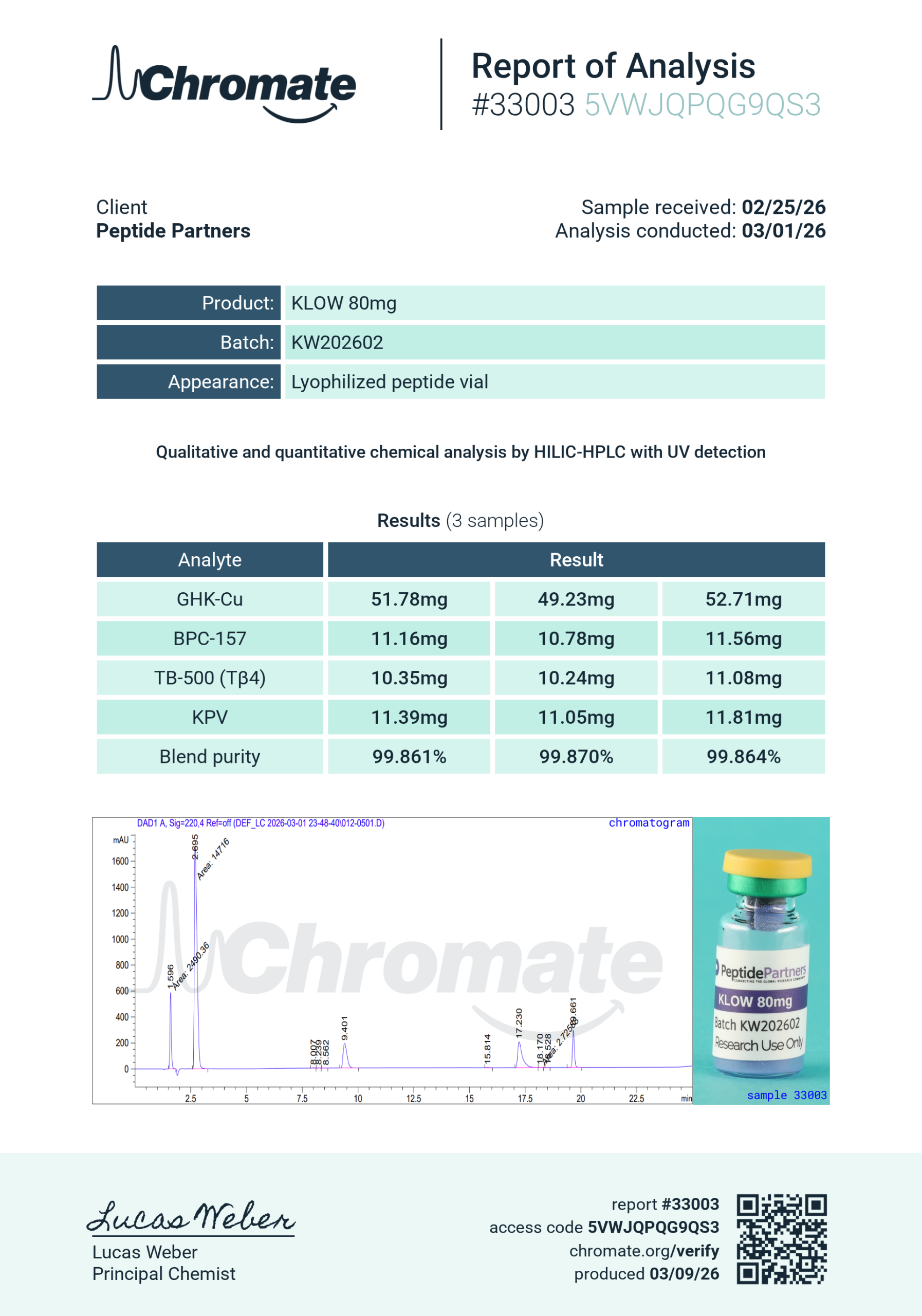
| KLOW | KW202602 | WF03 | 2026-03-01 | 99.86% | Chromate | View File |
| NAD+ | NDB202601 | VI32 | 2026-02-07 | 99.92% | Kovera | View File |
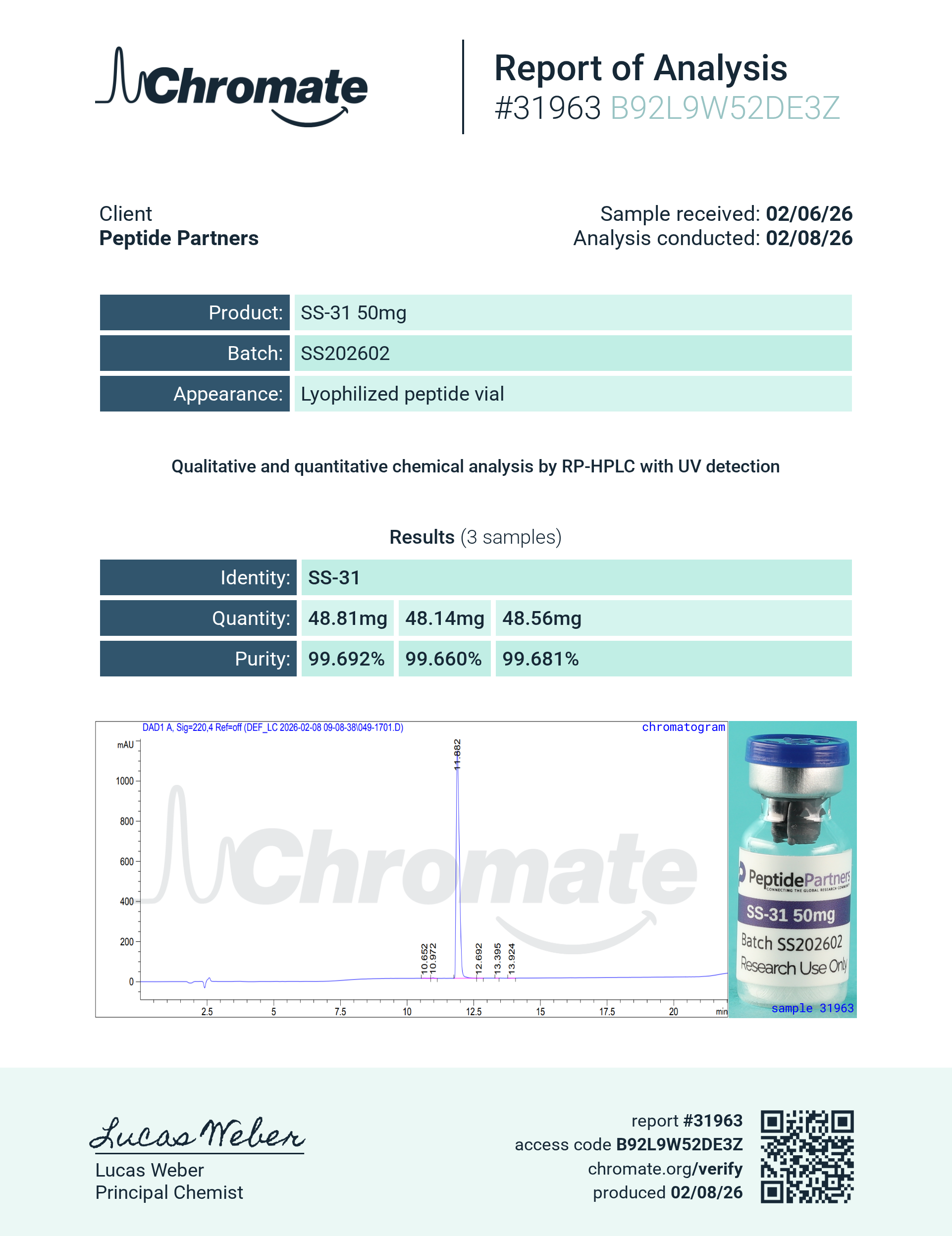
| SS-31 | SS202602 | WF03 | 2026-02-08 | 99.68% | Chromate | View File |
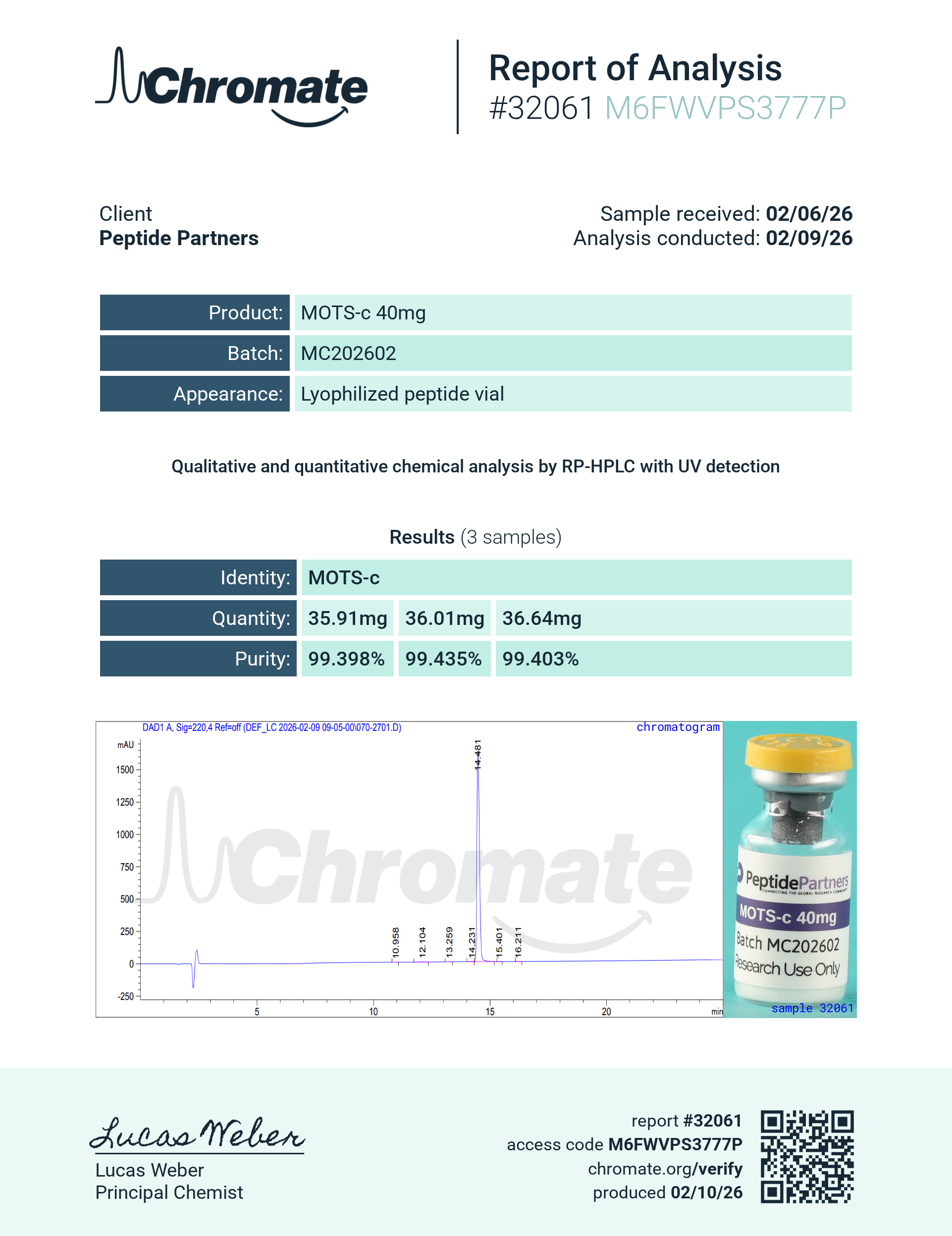
| MOTS-c | MC202602 | WF03 | 2026-02-09 | 99.41% | Chromate | View File |
| Selank | SEK202601 | VI32 | 2026-01-29 | 99.94% | Chromate | View File |
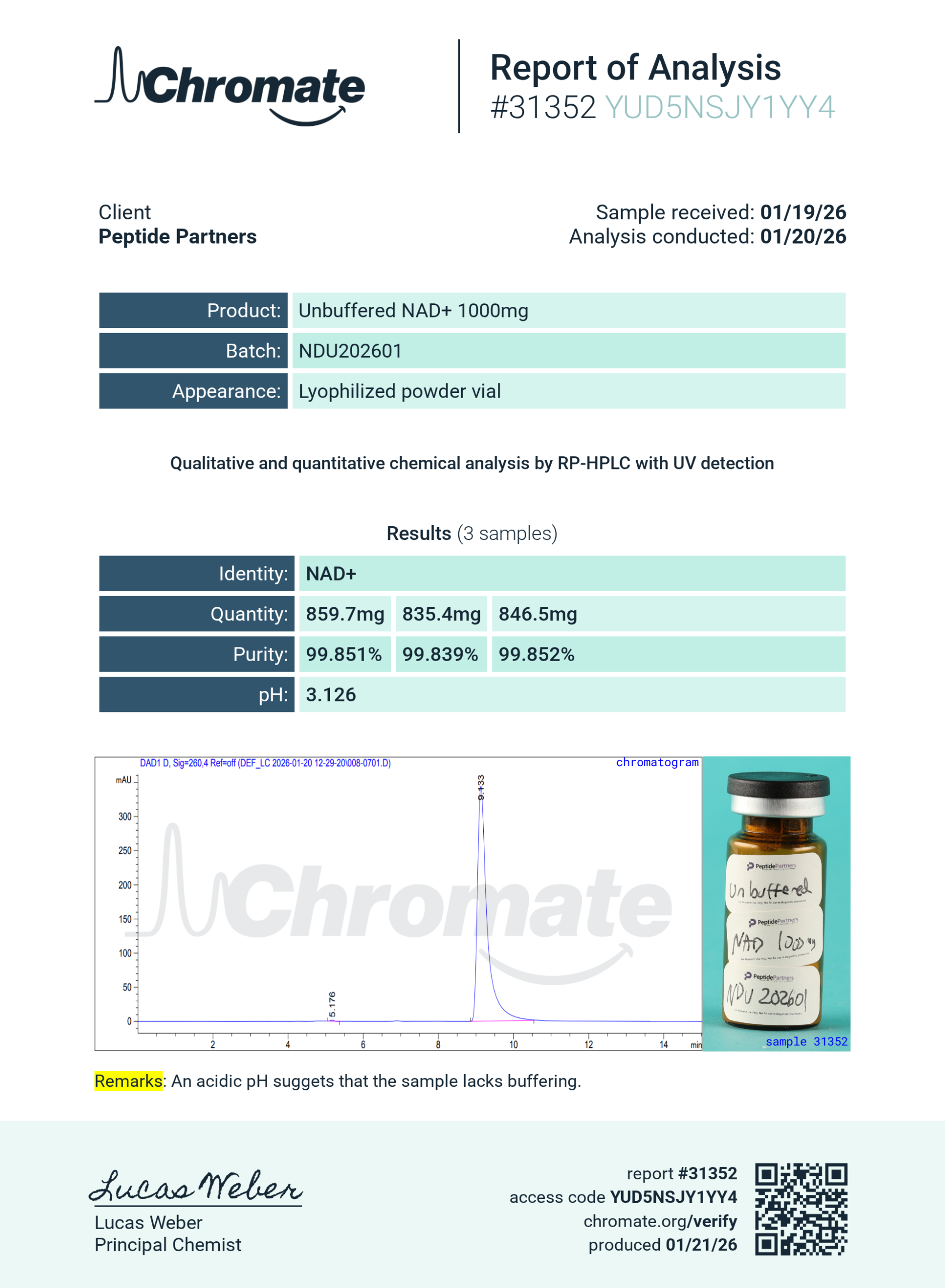
| Unbuffered NAD+ | NDU202601 | MZ21 | 2026-01-20 | 99.85% | Chromate | View File |
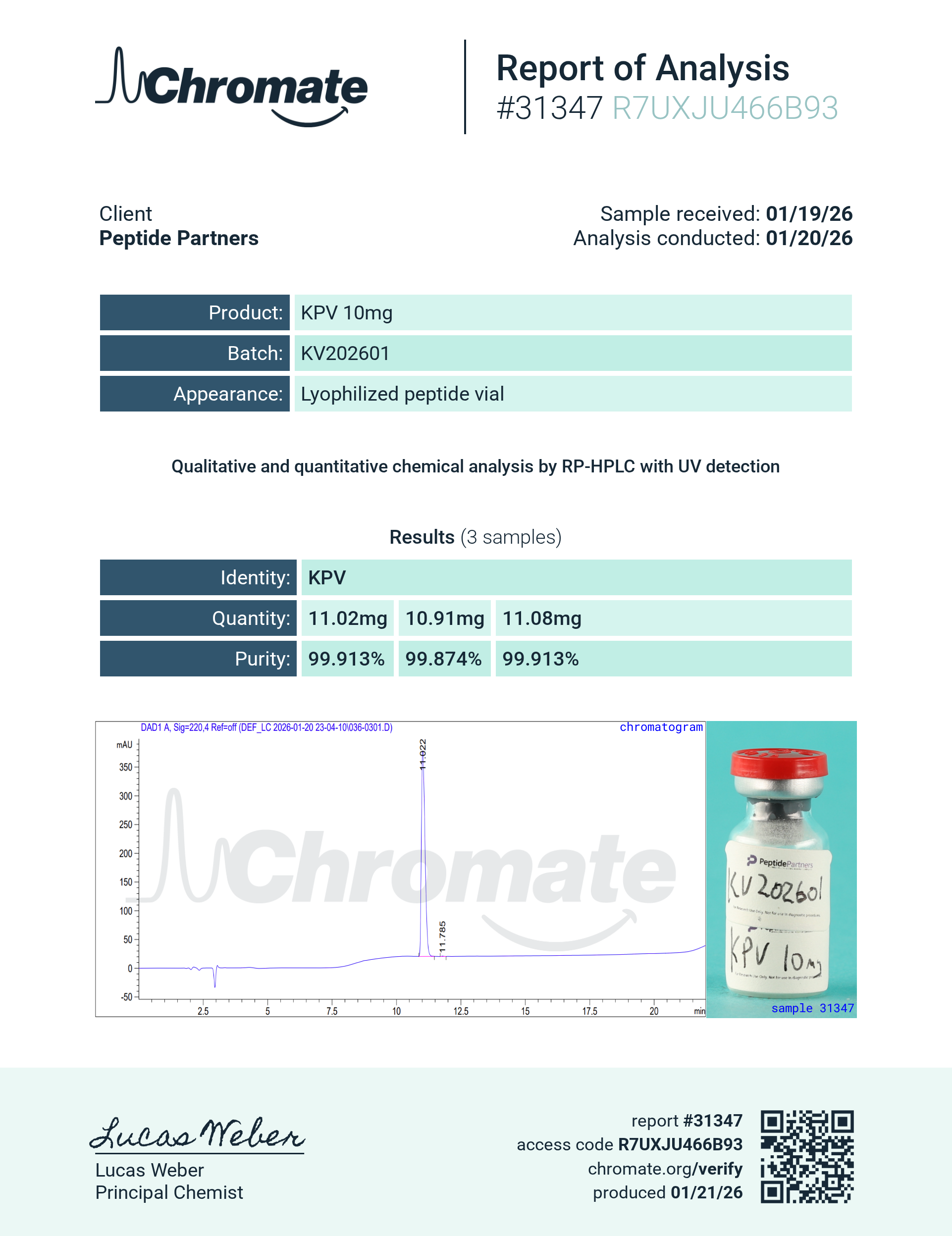
| KPV | KV202601 | VI32 | 2026-01-20 | 99.90% | Chromate | View File |
| Ipamorelin | IP202601 | WF03 | 2026-01-14 | 99.92% | TrustPointe | View File |
| TB500 (TB4) | TB202601 | WF03 | 2026-01-14 | 99.86% | TrustPointe | View File |
| Retatrutide | RT202602 | WF03 | 2026-01-13 | 99.63% | TrustPointe | View File |
| PT-141 | PT202512 | VI32 | 2026-01-12 | 99.89% | BioRegen | View File |
| Semaglutide | SM202601 | MZ21 | 2026-01-10 | 99.70% | TrustPointe | View File |
| Cagrilintide | CAG202601 | MZ21 | 2026-01-10 | 99.33% | TrustPointe | View File |
| Tesamorelin | TES202601 | WF03 | 2025-12-29 | 99.71% | TrustPointe | View File |
| BPC-157 | BP202512 | WF03 | 2025-12-29 | 99.46% | TrustPointe | View File |
| BPC-157/TB-500 | BB202512 | WF03 | 2025-12-29 | 99.64% | TrustPointe | View File |
| GHK-Cu | GK202512 | SH07 | 2025-12-19 | 99.79% | BioRegen | View File |
| MOTS-c | MC202512 | WF03 | 2025-12-22 | 99.89% | BioRegen | View File |
| Retatrutide | RP260130 | VI32 | 2025-12-22 | 99.72% | TrustPointe | View File |
| SS-31 | SS202512 | WF03 | 2025-12-19 | 99.70% | TrustPointe | View File |
| Retatrutide | RP202601 | DF05 | 2025-12-22 | 99.63% | TrustPointe | View File |
| Ipamorelin/CJC-1295 (No DAC) | CJIP202512 | WF03 | 2025-12-09 | 99.80% | TrustPointe | View File |
| Retatrutide | RP202511 | DF05 | 2025-12-19 | 99.73% | TrustPointe | View File |
| Retatrutide | RP20251020 | DF05 | 2025-11-10 | 99.33% | TrustPointe | View File |
| Retatrutide | RP20251001 | DF05 | 2025-10-13 | 99.86% | TrustPointe | View File |
| Tirzepatide | TZ20250915 | DF05 | 2025-10-03 | 99.74% | TrustPointe | View File |
| Retatrutide | RP20250929 | VI32 | 2025-10-03 | 99.47% | TrustPointe | View File |
| Humanin | HP20250805 | WF03 | 2025-09-19 | 99.92% | BioRegen | View File |
| MOTS-c | YC20250807 | WF03 | 2025-09-19 | 99.87% | BioRegen | View File |
| DSIP | DS20250820 | SH07 | 2025-09-19 | 99.88% | BioRegen | View File |
| SS-31 | SY20250806 | WF03 | 2025-09-19 | 99.70% | BioRegen | View File |
| CJC/Ipamorelin | CI20250805 | WF03 | 2025-09-11 | 99.84% | TrustPointe | View File |
| BPC-157 | BP20250808 | WF03 | 2025-09-05 | 99.99% | TrustPointe | View File |
| Sermorelin | SM20250723 | WF03 | 2025-08-27 | 99.84% | BioRegen | View File |
| Tesamorelin | TS20250722 | WF03 | 2025-08-22 | 99.10% | TrustPointe | View File |
| CJC-1295 ND | CJ20250724 | WF03 | 2025-08-20 | 99.43% | TrustPointe | View File |
| Semaglutide | SM20250801 | EJ12 | 2025-08-20 | 99.34% | TrustPointe | View File |
| Ipamorelin | IP20250721 | WF03 | 2025-08-15 | 99.64% | TrustPointe | View File |
| GHK-Cu | CU20250717 | SH07 | 2025-08-09 | 99.73% | BioRegen | View File |
| Tirzepatide | TZ20250730 | EJ12 | 2025-08-08 | 99.41% | TrustPointe | View File |
| NAD+ | ND20250503 | SH07 | 2025-07-31 | 99.76% | BioRegen | View File |
| VIP | VP20250511 | SH07 | 2025-07-31 | 99.42% | BioRegen | View File |
| Retatrutide | CD20250708 | SH07 | 2025-07-25 | 99.42% | TrustPointe | View File |
| BPC/TB500 | BB20250630 | SH07 | 2025-07-17 | 99.52% | TrustPointe | View File |
| TB500 (TB4) | TB20250614 | SH07 | 2025-07-17 | 99.68% | TrustPointe | View File |
| Peptide | Batch Id | Manufacturer | Date | USP Conformation | Laboratory | |
|---|---|---|---|---|---|---|
| GHK-Cu | CU202604 | WF03 | 2026-04-03 | Conforms | Kovera | View File |
| SS-31 | SS202601 | WF03 | 2026-04-03 | Conforms | TrustPointe | View File |
| Semax | SX202603 | WF03 | 2026-03-31 | Conforms | Kovera | View File |
| Retatrutide | RT202603 | WF03 | 2026-03-30 | Conforms | TrustPointe | View File |
| GLOW Blend | GW202603 | WF03 | 2026-03-25 | Conforms | Kovera | View File |
| Tirzepatide | TZ202603 | VI32 | 2026-03-27 | Conforms | TrustPointe | View File |
| BPC-157/TB-500 | BB202604 | WF03 | 2026-03-26 | Conforms | TrustPointe | View File |
| Tesamorelin | TES202603 | WF03 | 2026-03-25 | Conforms | TrustPointe | View File |
| BPC-157 | BC202604 | WF03 | 2026-03-17 | Conforms | Kovera | View File |
| Thymosin Alpha-1 | TA202601 | WF03 | 2026-02-25 | Conforms | Kovera | View File |
| NAD+ | NDB202601 | VI32 | 2026-02-08 | Conforms | Kovera | View File |
| Unbuffered NAD+ | NDU202601 | MZ21 | 2026-01-28 | Conforms | TrustPointe | View File |
| KPV | KV202601 | VI32 | 2026-01-28 | Conforms | TrustPointe | View File |
| Ipamorelin | IP202601 | WF03 | 2026-01-13 | Conforms | TrustPointe | View File |
| TB500 | TB202601 | WF03 | 2026-01-13 | Conforms | TrustPointe | View File |
| Retatrutide | RT202602 | WF03 | 2026-01-13 | Conforms | TrustPointe | View File |
| PT-141 | PT202512 | VI32 | 2026-01-07 | Conforms | BioRegen | View File |
| Semaglutide | SM202601 | MZ21 | 2026-01-10 | Conforms | TrustPointe | View File |
| Cagrilintide | CAG202601 | MZ21 | 2026-01-10 | Conforms | TrustPointe | View File |
| Tesamorelin | TES202601 | WF03 | 2025-01-06 | Conforms | TrustPointe | View File |
| BPC-157 | BP202512 | WF03 | 2025-12-30 | Conforms | TrustPointe | View File |
| BPC-157/TB-500 | BB202512 | WF03 | 2025-12-30 | Conforms | TrustPointe | View File |
| Retatrutide | RP260130 | DF05 | 2025-12-22 | Conforms | TrustPointe | View File |
| SS-31 | SS202512 | WF03 | 2025-12-19 | Conforms | TrustPointe | View File |
| Retatrutide | RP202601 | DF05 | 2025-12-22 | Conforms | TrustPointe | View File |
| Ipamorelin/CJC-1295 (No DAC) | CJIP202512 | WF03 | 2025-12-08 | Conforms | TrustPointe | View File |
| Retatrutide | RP202511 | DF05 | 2025-11-10 | Conforms | TrustPointe | View File |
| Retatrutide | RP20251020 | DF05 | 2025-11-10 | Conforms | TrustPointe | View File |
| Retatrutide | RP20251001 | DF05 | 2025-10-13 | Conforms | TrustPointe | View File |
| Tirzepatide | TZ20250915 | DF05 | 2025-10-03 | Conforms | TrustPointe | View File |
| Retatrutide | RP20250929 | VI32 | 2025-10-03 | Conforms | TrustPointe | View File |
| Humanin | HP20250805 | WF03 | 2025-09-19 | Conforms | BioRegen | View File |
| MOTS-c | YC20250807 | WF03 | 2025-09-19 | Conforms | BioRegen | View File |
| DSIP | DS20250820 | SH07 | 2025-09-19 | Conforms | BioRegen | View File |
| SS-31 | SY20250806 | WF03 | 2025-09-19 | Conforms | BioRegen | View File |
| CJC/Ipamorelin | CI20250805 | WF03 | 2025-09-03 | Conforms | TrustPointe | View File |
| BPC-157 | BP20250808 | WF03 | 2025-09-03 | Conforms | TrustPointe | View File |
| Bacteriostatic Water | BAC20250807 | SH07 | 2025-08-27 | Conforms | BioRegen | View File |
| Tesamorelin | TS20250722 | WF03 | 2025-08-20 | Conforms | TrustPointe | View File |
| CJC-1295 ND | CJ20250724 | WF03 | 2025-08-20 | Conforms | TrustPointe | View File |
| Sermorelin | SM20250723 | WF03 | 2025-08-20 | Conforms | TrustPointe | View File |
| Semaglutide | SM20250801 | EJ12 | 2025-08-20 | Conforms | TrustPointe | View File |
| Ipamorelin | IP20250721 | WF03 | 2025-08-11 | Conforms | TrustPointe | View File |
| GHK-Cu | CU20250717 | SH07 | 2025-08-08 | Conforms | TrustPointe | View File |
| Tirzepatide | TZ20250730 | EJ12 | 2025-08-04 | Conforms | TrustPointe | View File |
| NAD+ | ND20250503 | SH07 | 2025-07-29 | Conforms | TrustPointe | View File |
| VIP | VP20250511 | SH07 | 2025-07-29 | Conforms | TrustPointe | View File |
| Retatrutide | CD20250708 | SH07 | 2025-07-24 | Conforms | TrustPointe | View File |
| BPC/TB500 | BB20250630 | SH07 | 2025-07-17 | Conforms | TrustPointe | View File |
| TB500 (TB4) | TB20250614 | SH07 | 2025-07-17 | Conforms | TrustPointe | View File |
| Peptide | Batch Id | Manufacturer | Date | USP Conformation | Laboratory | |
|---|---|---|---|---|---|---|
| Semax | SX202603 | WF03 | 2026-03-31 | Conforms | Kovera | View File |
| GLOW Blend | GW202603 | WF03 | 2026-03-26 | Conforms | Kovera | View File |
| Tirzepatide | TZ202603 | VI32 | 2026-03-26 | Conforms | Kovera | View File |
| BPC-157 | BC202604 | WF03 | 2026-03-17 | Conforms | Kovera | View File |
| Thymosin Alpha-1 | TA202602 | WF03 | 2026-02-25 | Conforms | Kovera | View File |
| NAD+ | NDB202601 | VI32 | 2026-02-08 | Conforms | Kovera | View File |
| Ipamorelin | IP202601 | WF03 | 2026-01-26 | Conforms | TrustPointe | View File |
| TB500 | TB202601 | WF03 | 2026-01-26 | Conforms | TrustPointe | View File |
| Retatrutide | RT202602 | WF03 | 2026-01-26 | Conforms | TrustPointe | View File |
| Semaglutide | SM202601 | MZ21 | 2026-01-19 | Conforms | TrustPointe | View File |
| Cagrilintide | CAG202601 | MZ21 | 2026-01-19 | Conforms | TrustPointe | View File |
| Tesamorelin | TES202601 | WF03 | 2026-01-19 | Conforms | TrustPointe | View File |
| BPC-157 | BP202512 | WF03 | 2026-01-08 | Conforms | TrustPointe | View File |
| BPC-157/TB-500 | BB202512 | WF03 | 2026-01-08 | Conforms | TrustPointe | View File |
| Tirzepatide | TZ20250915 | DF05 | 2025-12-03 | Conforms | TrustPointe | View File |
| TB500 (TB4) | TB20250614 | SH07 | 2025-11-24 | Conforms | TrustPointe | View File |
| BPC-157 | BP20250808 | WF03 | 2025-11-12 | Conforms | TrustPointe | View File |
| BPC/TB500 | BB20250630 | SH07 | 2025-11-12 | Conforms | TrustPointe | View File |
| CJC-1295 ND | CJ20250724 | WF03 | 2025-11-12 | Conforms | TrustPointe | View File |
| GHK-Cu | CU20250717 | SH07 | 2025-11-12 | Conforms | TrustPointe | View File |
| Ipamorelin | IP20250721 | WF03 | 2025-11-12 | Conforms | TrustPointe | View File |
| Retatrutide | RP20251020 | DF05 | 2025-11-12 | Conforms | TrustPointe | View File |
| Sermorelin | SM20250723 | WF03 | 2025-11-12 | Conforms | TrustPointe | View File |
| SS-31 | SY20250806 | WF03 | 2025-11-12 | Conforms | TrustPointe | View File |
| TB500 (TB4) | TB20250614 | SH07 | 2025-11-12 | Conforms | TrustPointe | View File |
| Tesamorelin | TS20250722 | WF03 | 2025-11-12 | Conforms | TrustPointe | View File |
| Tirzepatide | TZ20250730 | EJ12 | 2025-11-12 | Conforms | TrustPointe | View File |
When obtaining research peptides, it is essential to validate the authenticity of the Certificate of Analysis (COA). Certificate fraud runs rampant throughout the research peptide supply community. The two most common forms are doctored images and stolen certificates. You can check for these two by making sure the third-party laboratory’s website shows that the certificate belongs to the supplier and the values haven’t been doctored. TrustPointe Analytics provides a few simple rules for verification:
Not only must one remain vigilant about potentially fraudulent certificates, one must also be aware that there are third-party laboratories whose results cannot be considered reliable or scientifically valid. Unfortunately, there is significant evidence to suggest that one of the most popular third-party testing labs does not use scientifically sound methodologies and, in some cases, has fabricated results. There isn’t an easy remedy for this problem, but when labs are particularly bad, there tend to be a lot of discussion threads on various social platforms.
Our friends at TrustPointe have provided the following detailed explanation to help interpret the results of the endotoxin testing.
We use the Charles River Endosafe PTS system to test for bacterial endotoxins following USP <85> guidelines:
The following are suitability parameters that verify the system was working properly and the sample prep dilution is appropriate for accurate results. Peptides often interfere with endotoxin detection due to their tendency to bind or mask endotoxins, which can lead to inaccurate low results. To overcome this, samples are typically tested at a large dilution to reduce matrix interference and ensure reliable recovery and detection in compliance with USP <85>. If the dilution is not correct, the run will fail suitability and we’ll need to adjust the dilution to ensure accurate results. We provide the suitability data to customers for transparency and so they can be confident in the results.
USP <85> Sample CV %:
USP <85> Spike CV %:
USP <85> Spike Recovery
Thank you for choosing Peptide Partners.
NOTICE: All information provided above is strictly intended for educational and informational purposes. Our products are designed for research use solely and are not approved for human consumption. Please refrain from any form of ingestion.
By making a purchase from Peptide Partners, you acknowledge that you are acquiring Research Chemicals. Our products are exclusively intended for laboratory research purposes.
It is imperative that only qualified and licensed professionals handle this product. Under no circumstances should it be utilized as a drug, agricultural or pesticide product, food additive, or household chemical. Misrepresentation of this product for such purposes is strictly prohibited by law. All content on our website is provided for educational use exclusively. Any form of introduction into the human or animal body is illegal.